Key Takeaways
- Gartner expected a rise in the vibe coding techniques.
- Prompt to app development software describes the desired app in the plain language.
- Intent capture, generations preview and runs, conversational iteration, and deployment are the key steps in prompt to app development.
- The key risks includes sensitive data exposure, security flaws, prompt injection, and shadow apps.
- Connectivly with Nativly can help in building an app via prompts quickly.
Adopting to prompt-to-app development is not just implementing the technology, its all about a new era where manual work is assigned to AI, while the strategies are being framed by the management.
By 2028, Gartner expects 40% of new enterprise production software to be created with vibe coding techniques.
In the same period, it also forecasts that prompt-to-app approaches adopted by citizen developers will increase software defects by 2500%. Both can be true, and CIOs now have to manage that tension.
Prompt-to-app development turns plain-language descriptions into working applications in hours. It also makes it just as easy to ship insecure, unowned, and unmaintainable software at scale.
This guide is not a tool list. It’s a decision framework that shows where prompt-to-app fits, how to govern it, and when to bring in a development partner.
What is Prompt-to-App Development?
Prompt-to-app development is a software creation method where users describe a desired application in plain language, and AI agents automatically generate the frontend, backend, and deployment scripts.
The underlying models interpret your intent, map it to appropriate frameworks, and produce the deployable outputs without requiring you to write the manual code. This approach eliminates the traditional development complexity by translating requirements into structured components.
Additionally, the prompt-to-app development transforms a vague idea into a functional, deployable application.
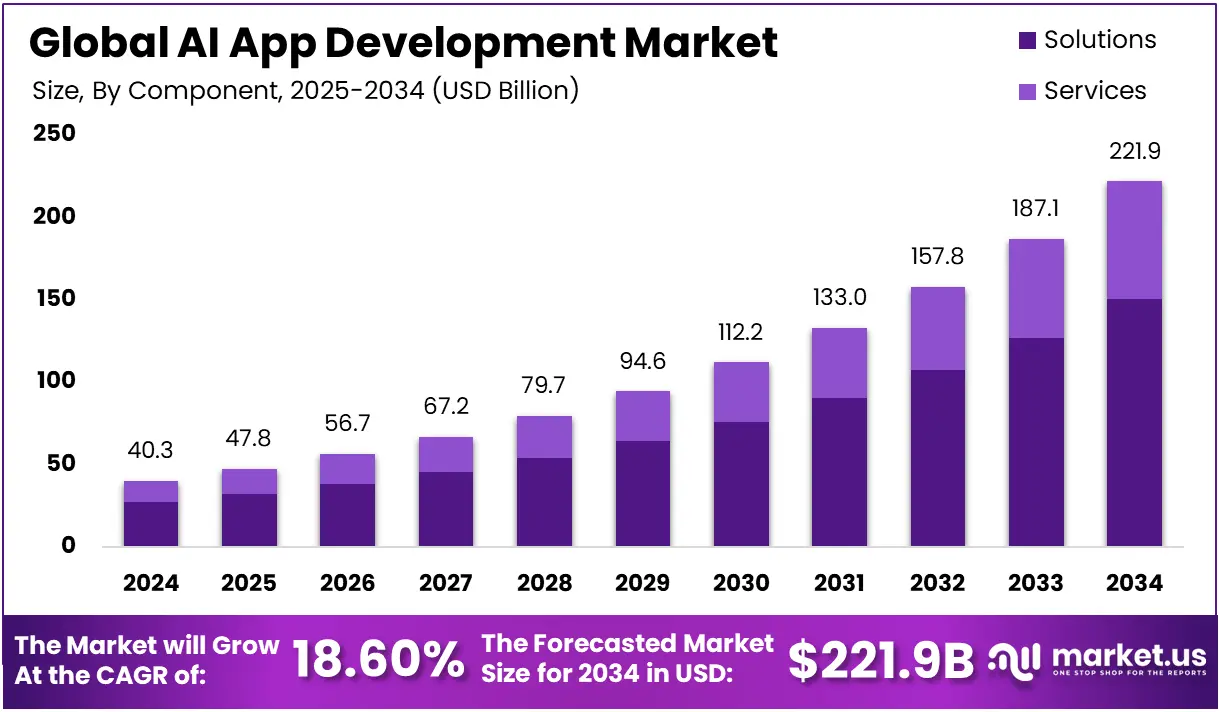
The global AI app development market size is expected to be worth around USD 221.9 billion by 2034, from USD 40.3 billion in 2024, that is growing at a CAGR of 18.60% from 2025 to 2034.
This represents a quick shift of market towards AI app builders.
Why Prompt-To-App Is Landing On The CIO’s Desk Now
The ability to generate complete functional software applications from plain-English text prompts has rapidly evolved from a tech-demo novelty into a pressing strategic challenge for corporate technology leaders.
Prompt-to-app technology has officially shifted from a developer toy to an enterprise-wide governance challenge. It has evolved from a shadow-IT novelty into a boardroom dilemma. Let’s understand a few more reasons:
- Turn business ideas and prototypes into working apps faster.
- Connect AI-generated apps with existing systems, data, and workflows.
- Make it easier to measure whether AI-driven development delivers business value.
- Aligns with business needs by eliminating the risk of requirements getting lost in translation.
- Lowers R&D overhead and optimizes engineering talent.
These are the major reasons why founders are switching to AI app builders.
Here, many of the founders and entrepreneurs often ask, “Where does prompt-to-app deliver value?” Let’s consider the following section for the same.
Where Prompt-To-App Delivers Value (And Where It Doesn’t)
Prompt-to-app tools translate the text descriptions into working software interfaces and codebases. They excel at rapid prototyping and standard workflows, but hit hard limits on complex architecture or deep security.
Let’s identify where prompt-to-app delivers value, and where it doesn’t:
Where prompt-to-app delivers value:
- Faster Prototyping
- Workflow automation
- Business-team experimentation
- Legacy system extensions
Where prompt-to-app doesn’t deliver value:
- Complicated native device integration.
- Long-term maintainability
- Out-of-the-box security and compliance
- Complex enterprise backend logic
How Prompt-to-App Development Works
The complete process of prompt-to-app development involves the following key steps.
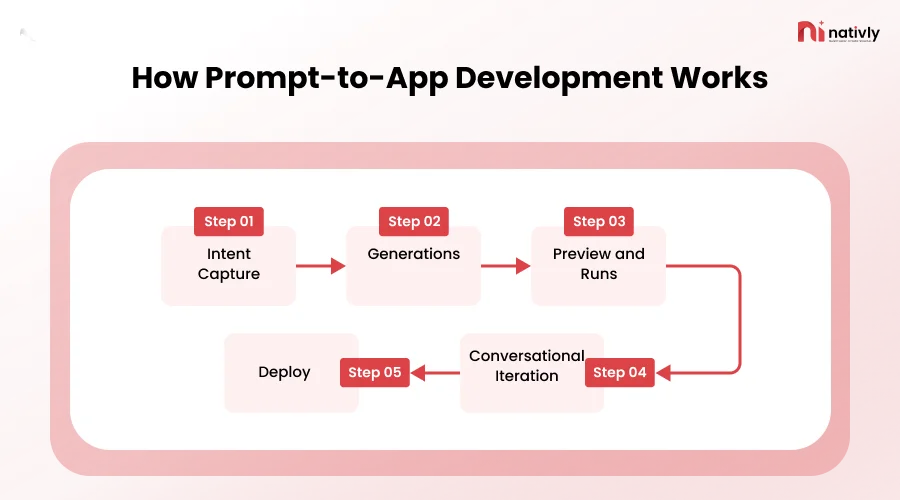
Step 1: Intent Capture
Once the user writes the complete prompt as per their requirements, the AI app builders evaluate the user’s intention. Here, the user describes the app in natural language instructions and refines it through conversations.
Here, users state the core problem statement and define the core goal for developing their apps and constraints in plain language before any code, architecture, or design.
Step 2: Generations
Now, the AI app builders use LLMs to generate the UI, code, and infrastructure from the prompt. Under this step, AI takes your natural language description and automatically writes the actual code, structure, and database logic for the app.
Basically, it means a front end, a data model, a backend, and authentication all work together.
Step 3: Preview and Runs
The generated app is live right away, so the user judges it by using it rather than by reading a spec. It acts as the live testing and execution checkpoint where the generated code comes to life in a real browser sandbox.
Under this prompt-to-app development working process, code compilation and server setup take place, and real-time execution and live interactive rendering take place.
Step 4: Conversational Iteration
In this step, the user expands the application by talking to the AI, and this is the third step where you refine and debug just like a human developer. Instead of writing complex code to fix errors or add features, you give the AI feedback.
Here, the user sees what is missing in the app, and then corrects it by either writing the code themselves or mentioning it in the natural language prompt.
Step 5: Deploy
Deploying is the fifth step where the user finally brings the app into reality from a local and sandbox environment. This includes one-click publishing, environment promotion, public URL generation, and backend and API security.
Additionally, this can lead to environment promotion. If you are building a mobile or multi-tier web app, this step packages the build files and pushes containerized code to a cloud hosting service.
Here, many of founders and entrepreneurs often asks “how to choose an AI app builder for your enterprise?”
Well, what you need is to evaluate your app’s requirements and goals, and then match them with the selected AI app builder. At last, you should evaluate the prices and match it with your budget.
The Risks CIOs Can’t Ignore
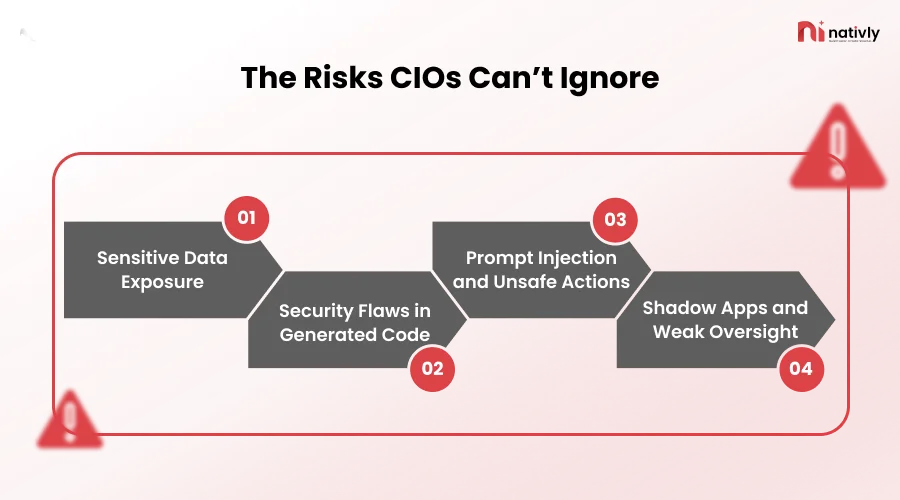
Prompt-to-app development can be riskier for CIOs, and here is a list of risks that they should not ignore:
-
Sensitive Data Exposure
When organizations use natural language prompts for automatically generating code, logic, and deployed applications, they radically speed up development.
However, this procedure introduces unique, massive data security blind spots.
Apps should also expose data through weak access controls or excessive permissions.
Other than this, sensitive data exposure results in training and telemetry data leaks, embedded hardcoded secrets, and data ingestion during generation.
-
Security Flaws in Generated Code
AI can produce insecure authentication, authorization, input handling, and dependency choices.
You should note that a working demo is not evidence that the code is safe.
AI tools generate code from patterns of the app and the request as given in the prompts.
This is because large language models (LLMs) frequently bake vulnerabilities directly into the software.
-
Prompt Injection and Unsafe Actions
Prompt injection and unsafe actions represent an important risk because they transform the generative AI from a passive “output” tool into an active cyber-threat vector that is capable of executing real-world damage across the enterprise.
Here, common examples of such type of risks comprises of missing access checks, unsafe input handling, exposed credentials, risky dependencies, and subtle logic errors.
-
Shadow Apps and Weak Oversight
As SaaS adoption expands, Gartner projects that 75% of technology purchases will be managed outside IT.
Within the modern enterprise, these two factors fundamentally compromise a CIO’s ability to protect data, manage costs, and ensure regulatory compliance.
The key examples of shadow apps and weak oversight comprise an unapproved team dashboard, an automation with board access, and the credentials embedded in the app.
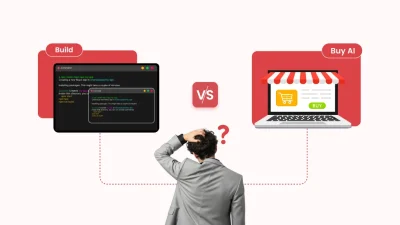
Build, Buy, or Partner: What is the Right Way for App Development?
Selecting between build, buy, or partner for app development depends on your core business goals, budget, and timeline, and whether the app offers you a competitive advantage or not.
Here are the key parameters that you should consider:
| Choose | Best when… | Check first |
| Build with an AI app builder | The app supports a unique workflow or competitive advantage, and you need control over its features and data. | Security, scalability, maintenance, and who owns the app after launch. |
| Buy | The need is common, and a mature product can meet it faster and more reliably. | Total cost, integration fit, data handling, and vendor lock-in. |
| Partner | You need specialist AI, industry, integration, or compliance expertise your team lacks. | Clear ownership, responsibilities, IP rights, and ongoing support. |
Also Read: “ A Complete Guide to Build Enterprise Apps With AI”
When it comes to app development with the AI app builder, you cannot ignore the cost and related elements; hence for this, let’s check out the following section.
Evaluating the Total Cost of Prompt-to-App Development
Most of the AI app builder like Nativly begins with $20/month. Additionally, it all depends on the types of different factors that impacts such cost.
When it comes to Nativly, the total cost of prompt-to-app development begins at $19 per month, and for launching an MVP, it begins at $199/month.
You should identify the total cost of prompt-to-app development after evaluating the following factors:
- Identifying the scope and goals of your app.
- Prompt sensitivity and wording
- Model size and reasoning power
- Underlying AI-to-App Platform
- Context window and memory.
A 90-Day CIO Action Plan
A CIO can adopt a complete 90 day action plan as below:
| Timing | CIO actions | Outcome |
| Days 1–30: Set guardrails | Inventory prompt-built apps, classify data and risk, approve tools, and assign app owners. | Visibility and clear rules |
| Days 31–60: Pilot safely | Select 2–3 low-risk use cases, conduct security and user testing, and define production approval steps. | Tested pilot apps and repeatable reviews |
| Days 61–90: Scale selectively | Measure adoption, reliability, cost, and business value; address gaps; scale successful apps and retire unsafe or duplicate ones. | A governed app portfolio and scale-up decision |
How Nativly Offers Prompt-to-App Development
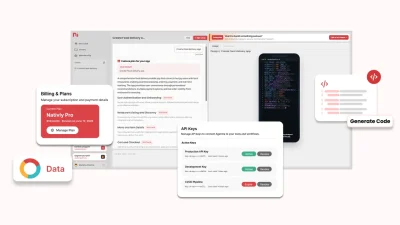
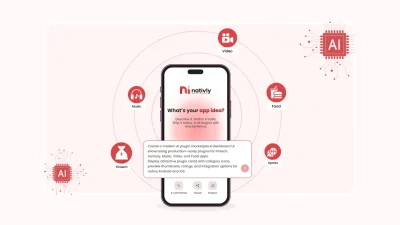
Nativly offers prompt-to-app development by turning the app ideas into working apps, and by letting users describe what they need in plain language. They generate and refine the app without starting from scratch in code.
Here’s what Nativly offers:
- Turn app ideas into working prototypes with the help of plain languages.
- Speed up development and reduces the reliance on manual coding.
- Quickly refine apps as business needs changes.
Connecting with Nativly is helpful in building an app seamlessly.
Conclusion
Prompt to app development has risen across the world. Even developers are using AI app builders to eliminate the manual workflows. Prompt to app development is a process where a simple language prompts are converted into functional apps.
For CIOs, prompt to app development is aligning the business needs by eliminating the risk of being misunderstood or lost in translation.
The simple process of prompt to app development working begins with intent capture, generations, preview and runs, and then ends on conversational iteration and deployment.
The cost of prompt to app development builder can vary depending on your app, and its requirements.
WIth a 90 day plan, CIO can opt for prompt to-app development model. Here, Nativly can be helpful in opting this option successfully.
FAQs
Q1. What is prompt-to-app development?
Prompt to app development is the complete procedure of building working web or mobile software by describing what you want in plain natural language rather than writing the traditional code.
Q2. Why prompt-to-app is landing on the CIO’s desk now?
Prompt to app development turns the business ideas and prototypes into working apps faster. It connects AI-generated apps with existing systems, data, and workflows. Additionally, it lowers R&D overhead and optimizes engineering talent.
Q3. How prompt to app development works?
The complete process that is followed with prompt to app development begins with intent capture from the prompt, use LLMs to generate UI, in the next process code compilation takes place, and then the app is deployed on the designated platforms.
Q4. How much faster and cheaper is prompt-to-app?
The prompt to app tools drastically reduce both development time and financial costs compared to traditional or no-code development routes. On the other hand, when it comes to building the app from scratch, it can cost you from $20,000 to evem $200,000 sometimes.
Q5. Who owns and maintains an app generated from a prompt?
A business owner or an enterprise can offer this responsibility to their employees with respect to create their app with the help of AI app builder. Additionally, the user or an enterprise can maintain simultaneously with the help of an AI app builder.